

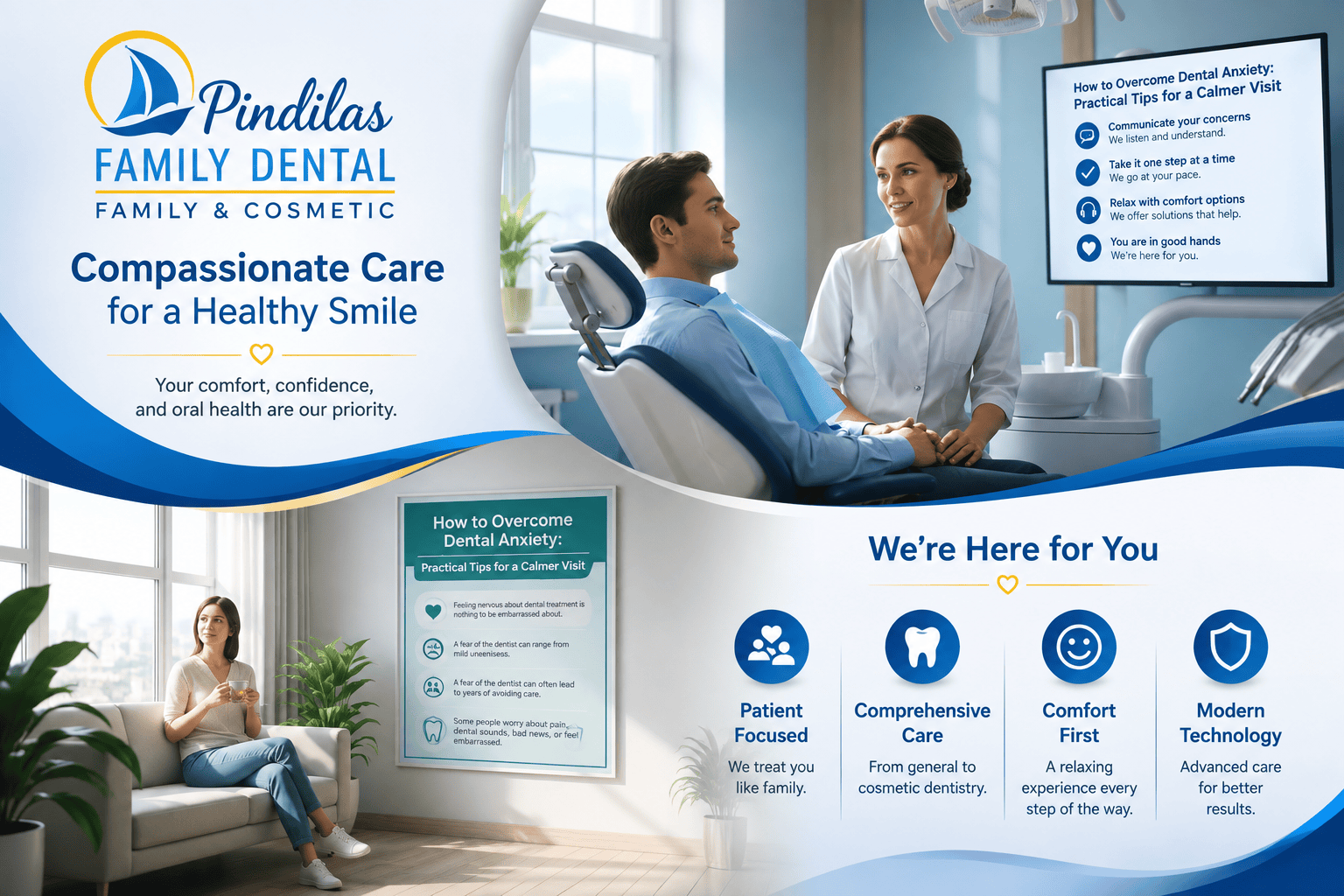
Feeling nervous about dental treatment is nothing to be embarrassed about.
A fear of the dentist can range from mild uneasiness before an appointment to anxiety strong enough to cause repeated cancellations or years of avoiding care.Some people worry about pain. Others dislike dental sounds, feel uncomfortable lying back, fear receiving bad news, or feel embarrassed about how long it has been since their last visit.
Avoiding care may provide temporary relief from anxiety, but it can allow a manageable dental concern to become more complicated. The ADA notes that delaying visits can increase the risk of developing dental problems that make future appointments more difficult. (MouthHealthy)
The following dental anxiety tips can help you feel more prepared, supported, and in control.
Identify What Makes You Anxious
Dental anxiety does not have one universal cause. Understanding your specific trigger makes it easier to discuss practical solutions.
Common concerns include:
- Fear of pain or injections
- A difficult previous experience
- Dental sounds, smells, or instruments
- Feeling unable to communicate
- Discomfort with reclining
- A sensitive gag reflex
- Worry about treatment costs
- Embarrassment about oral health
- Fear of receiving an unexpected diagnosis
- Concern about sedation or medication
Try to describe the concern as specifically as possible. Saying, “The sound of dental instruments makes me tense,” gives the team more useful information than simply saying, “I hate the dentist.”
Tell the Dental Office Before Your Appointment
Do not wait until treatment begins to mention anxiety.
Tell the scheduling team that you feel nervous and briefly explain what concerns you. This gives the office an opportunity to note the information, prepare the clinical team, and discuss whether a particular appointment time or approach may be helpful.
Remind the dentist or dental assistant when you arrive. Anxiety can change from one visit to another, so the team should know how you feel that day.
The ADA specifically recommends mentioning anxiety when booking, reminding the dental team upon arrival, sharing previous negative experiences, and asking about coping strategies. (MouthHealthy)
Begin With a Manageable First Step
Returning to the dentist after a long absence can feel overwhelming. The first visit does not necessarily need to involve extensive treatment.
A consultation or new-patient examination can allow you to:
- Meet the team
- Discuss your concerns
- Review your dental and medical history
- Understand the condition of your mouth
- Learn what treatment may be needed
- Ask about comfort options
- Create a step-by-step plan
Knowing that the first goal is to gather information—not complete everything immediately—may make the appointment feel more manageable.
Ask the Dentist to Explain What Will Happen
Uncertainty can make anxiety worse.
Before treatment begins, ask the dentist to explain the procedure in plain language. You may want to know how long it will take, what sensations to expect, how the area will be numbed, whether you will hear particular sounds, and what recovery may involve.
Some patients prefer a detailed explanation. Others want only the essential information. Tell the dentist which approach helps you feel calmer.
You can also ask the team to warn you before changing instruments, reclining the chair, using water, or beginning a new step.
Agree on a Stop Signal
Feeling unable to communicate is a common source of dental anxiety.
Before treatment begins, agree on a signal that means you need the dentist to pause. Raising one hand is a simple option.
A stop signal gives you a way to request a short break, ask a question, swallow, adjust your position, or explain discomfort. The ADA includes establishing a hand signal among its recommended strategies for anxious dental patients. (MouthHealthy)
Knowing that you can pause treatment may help you feel more in control, even when you do not need to use the signal.
Use Breathing and Distraction Techniques
Anxiety can cause people to hold their breath or breathe quickly. Slow, steady breathing may help reduce physical tension.
Try inhaling slowly, then exhaling at a comfortable pace. Focus on keeping your shoulders, hands, jaw, and forehead relaxed. The goal is not to force yourself to feel completely calm; it is to reduce the tension enough to remain present.
Distraction can also help. With the dental team’s approval, consider:
- Listening to music, an audiobook, or a podcast
- Holding a small stress ball
- Focusing on a visual point in the room
- Imagining a familiar, peaceful location
- Relaxing one muscle group at a time
ADA recommends headphones, visualization, counted breathing, and progressive body relaxation as practical ways to manage dental anxiety. (MouthHealthy)
Choose an Appointment Time That Works for You
Some patients prefer morning appointments because they have less time to worry beforehand. Others feel calmer later in the day when they are not rushing through work, school, or family responsibilities.
Choose a time that allows you to arrive without unnecessary pressure. Avoid creating an overly demanding schedule immediately before or after the appointment.
Arriving several minutes early can help you complete check-in calmly. Arriving extremely early, however, may give you more time to sit and worry. Find the balance that works for you.
A trusted friend or family member may also provide reassurance. Ask the dental office in advance whether someone can accompany you and at what point they may need to remain in the reception area.
Discuss Pain Control Openly
Do not assume that you must tolerate discomfort silently.
Ask how the area will be numbed and how the dentist will confirm that the anesthetic is working. During treatment, tell the dentist about sharp pain, increasing discomfort, or a sensation that concerns you.
The ADA advises patients to discuss pain before treatment and speak up if they experience pain even after receiving local anesthetic. (MouthHealthy)
Open communication allows the dentist to evaluate what you are feeling and decide whether treatment should be paused or adjusted.
Ask About Sedation Dentistry When Appropriate
For some patients or procedures, sedation dentistry may be considered as part of a comfort plan. Sedation is not one single method, and it does not always mean being completely unconscious.
Depending on the provider, procedure, and patient, sedation may involve an inhaled gas, an oral medication, medication administered by injection, or a deeper level of anesthesia.
The ADA explains that decisions about anesthesia or sedation should consider the planned procedure, overall health, allergies, medications, and anxiety level. Patients and dentists should discuss the benefits and risks before deciding what is appropriate. (MouthHealthy)
Questions to ask include:
- What comfort or sedation options are available?
- Who will administer and monitor the sedation?
- What level of awareness should I expect?
- Do I need to avoid food or drink beforehand?
- Will I need someone to drive me home?
- What medications and health conditions should I report?
- What instructions should I follow after treatment?
Not every dental practice provides every level of sedation, and not every patient is an appropriate candidate. Confirm availability and suitability directly with the dentist.
Do Not Self-Medicate Before a Dental Visit
Never take someone else’s prescription medication, use alcohol, or take an unapproved sedative in an attempt to manage dental anxiety.
These substances may interact with medications used during treatment or create safety concerns. Take only medication that has been prescribed or specifically approved for you, and follow the instructions exactly.
Tell the dentist about all prescription medicines, over-the-counter products, and other substances you use. This information is essential when discussing pain control, sedation dentistry, or anesthesia.
Let Confidence Develop Gradually
Overcoming a fear of the dentist may take more than one appointment.
The goal does not have to be feeling completely relaxed immediately. A more realistic goal may be making the appointment, entering the office, completing an examination, or finishing one stage of treatment.
Each manageable experience can make the next visit feel more predictable. After the appointment, notice what helped and tell the team what could be improved next time.
Progress is still progress, even when some anxiety remains.
A Calm Dental Visit Checklist
Before the appointment: Tell the office about your anxiety, choose a suitable appointment time, prepare your questions, update your medication list, and arrange transportation when instructed.
At the appointment: Remind the team about your concerns, ask for an explanation, agree on a stop signal, use slow breathing, and speak up about discomfort.
After the appointment: Follow written instructions, contact the office about unexpected symptoms, note which coping strategies helped, and schedule recommended follow-up care before anxiety has time to rebuild.
Find a Dental Team That Listens
The right dental team should take anxiety seriously without making you feel judged. Clear explanations, gentle care, reasonable breaks, and honest communication can make dental treatment feel much more manageable.
Pinellas Family Dental states that its care team is gentle, compassionate, focused on the patient’s individual experience, and attentive to patients’ concerns and questions. (dentalflorida.com)
Patients who are nervous about an upcoming appointment can call (727) 518-8349 and mention their concerns while scheduling.
Frequently Asked Questions
Is dental anxiety normal?
Feeling uneasy about dental care is common, and people experience it at different levels. Anxiety may be related to pain, previous experiences, embarrassment, loss of control, sounds, costs, or uncertainty. Sharing the concern with the dental team is an important first step.
Can I take something before my appointment?
Take medication only when it has been prescribed or approved specifically for you. Do not use someone else’s medication, alcohol, or an unapproved sedative. Your dentist needs to review your health history and current medications before recommending any anxiety or sedation option.
Does sedation dentistry always put you to sleep?
No. Some forms are intended to help patients feel relaxed while remaining awake, while deeper levels may produce significant drowsiness or unconsciousness. The appropriate level depends on the procedure, provider, health history, and individual needs. (MouthHealthy)
What should I do when my fear is severe?
Tell the dental office before scheduling treatment and ask whether the dentist regularly works with highly anxious patients. A gradual care plan may help. People with severe dental phobia may also benefit from discussing anxiety with a qualified mental-health professional alongside their dental care.
This article provides general educational information. Medication, sedation, anesthesia, and treatment decisions require an individualized evaluation by a qualified healthcare professional.
Custom Sports Mouthguards vs. Store-Bought: Which Is Better?
In a sporting-goods store or if you browse online you can find a wide variety of mouthguards. A few are taken straight from the package,

Bleeding Gums Aren’t Normal: 7 Signs of Gum Disease You Shouldn’t Ignore
While you are brushing your teeth, you notice a small amount of pink in the sink. It’s easy to ignore, especially if your gums aren’t

Gum Disease and Heart Health: What’s the Connection?
If you’re considering ways of looking after your heart, it’s probably not the first thing that comes to mind to brush and floss. However, since

How to Overcome Dental Anxiety: Practical Tips for a Calmer Visit
Feeling nervous about dental treatment is nothing to be embarrassed about. A fear of the dentist can range from mild uneasiness before an appointment

Why Patient Experience Matters in Dentistry
Why Patient Experience Matters in Dentistry Successful dental care is not based only on the procedure performed. It is also shaped by how patients are

Cherry Financing for Dental Care: Get the Treatment You Need and Pay Over Time
Dental care impacts more than just your teeth. It influences your comfort, confidence, and overall health. Still, paying for treatment all at once can be