

While you are brushing your teeth, you notice a small amount of pink in the sink. It’s easy to ignore, especially if your gums aren’t aching. However, gums that bleed every time you brush or floss may be providing you with important information about your oral health. Bleeding gums can indicate gingivitis and periodontal disease, but they can also have other causes.
The difficult thing is that gum disease can progress without you noticing. You might not have a toothache or any considerable discomfort in its early stage.

If you know what signs to look for, you can get dental care before the condition becomes more advanced.
There are seven signs that your gums may need professional attention.
1. Gums that bleed when brushing or flossing
Gums generally shouldn’t bleed regularly.
If plaque builds up around the gumline, it can irritate the gum tissue and lead to inflammation. Inflamed gums are more likely to bleed when you brush or floss.
It is possible to experience temporary bleeding if you have only recently begun flossing after a long time not having done so. However, persistent or repeated bleeding should not be regarded as normal.
A dentist can determine whether gum inflammation, your brushing technique, medication, or another cause is playing a role. At home, you can monitor your gums by noting how often you bleed and whether it is improving, worsening, or staying the same; observe whether the bleeding happens every time you brush or only occasionally, and whether it is mild or more severe. By recording these changes, you can spot patterns and give your dentist useful information when you see him or her.
2. Red, swollen, or sore gums
Healthy gum tissue is usually firm when you press on it.
When gums become inflamed, they may look:
- Redder than usual
- Puffy or swollen
- Shiny
- Tender when touched
These changes are linked to gingivitis, which is the initial stage of gum disease. The good news is that if gum inflammation is addressed early, it can be prevented from progressing to more serious periodontal issues.
3. Persistent Bad Breath
It is common for people to have bad breath from time to time. A person’s breath can be temporarily altered by having a cup of coffee, eating onions or garlic, or simply waking up in the morning; however, if bad breath keeps coming back even when you brush your teeth and clean between them, it may be worth investigating.
Bacteria may build up around and below the gumline, and when periodontal pockets form, those areas become challenging to clean properly at home. Bad breath doesn’t necessarily mean you have gum disease, so it’s a beneficial idea to talk to your dentist about it.
4. Receding Gums
Have your teeth started to appear longer than usual?
Your teeth might not be growing; instead, your gums could be receding.
Gum recession happens when the gum tissue shifts from its original position on the tooth, thus exposing more of the tooth or root surface.
While periodontal disease may lead to gum recession, aggressive brushing, tooth position, genetic factors, and other elements can also be involved. To help prevent gum recession and keep your gums in excellent condition, brush gently with a soft toothbrush and have your teeth checked regularly by a dentist.
Recession can cause sensitivity because the roots are not protected by the same enamel as the tooth crowns.
5. Increasing Tooth Sensitivity
Does drinking a small amount of cold water suddenly cause you to wince?
Sensitive teeth: Several factors, including cavities, enamel wear, grinding, and exposed tooth roots, can cause sensitive teeth. Sensitive teeth can be caused by various factors, including cavities, enamel wear, grinding, and exposed tooth roots. Sensitive teeth: Several factors, including cavities, enamel wear, grinding, and exposed tooth roots, can cause sensitive teeth. Sensitive teeth can be caused by various factors, such as cavities, enamel wear, grinding, and exposed tooth roots.
If the gums recede, then the parts of the root that were previously protected become exposed, and these areas may be especially sensitive to cold, heat, sweets, or touch.
If you are experiencing new, ongoing, or increasing sensitivity, do not assume that using a sensitivity toothpaste will resolve the issue. Although minor, occasional sensitivity can sometimes be managed at home by brushing gently and using desensitizing toothpaste, it’s important to understand the limits of self-treatment. If the sensitivity continues, worsens, or starts to affect your daily routine, a dental check-up can help identify what’s causing the problem and whether professional treatment is needed.
6. Teeth that are loose or shifting
This kind of sign must never be ignored.
The gums and jawbone work together to support the teeth, so when advanced periodontal disease damages these structures, the teeth may begin to feel loose or shift position.
You may notice:
• New spaces between teeth
• Teeth appearing to move
• A tooth feeling unstable
• Changes in the way your dentures or partial dentures fit
Adult teeth shouldn’t be loose, so contact your dentist if you notice any mobility.
7. Changes in how your teeth come together
Periodontal troubles: You may not always notice periodontal troubles when examining the gums. When you look at the gums.
You might instead notice that your bite is different.
Tooth position may change if the supporting structures of the teeth are affected. Your upper and lower teeth might then no longer come together in the same way.
As there are a number of possible reasons for a change in your bite, a professional should assess it, as several factors could cause it to change By a professional.
Why Does Gum Disease Develop?

Gum disease starts when plaque builds up on your teeth. Plaque is a sticky film of bacteria. If you do not remove plaque by brushing and flossing, it can harden into tartar. Tartar makes it harder to clean your teeth. Tartar buildup lets more bacteria grow along the gum line.
Your body’s immune system tries to fight these bacteria. This condition can cause your gums to become red, swollen, and bleed easily. Over time, the infection can break down the tissue and bone that support your teeth. This can lead to loose teeth or even tooth loss.
The process usually starts with dental plaque.
Plaque is a sticky film of bacteria that forms on teeth, but brushing daily and cleaning between them can help control it.
If plaque is not properly removed,, it can cause gum inflammation and may harden into calculus, commonly known as tartar.
Tartar cannot be removed at home and usually requires a professional. During a professional dental cleaning, your hygienist uses special instruments to remove tartar and plaque from your teeth, including areas below the gumline that you can’t reach with brushing or flossing. The procedure is generally comfortable, and your hygienist might also polish your teeth so that they feel smooth and clean. Professional cleanings are essential for preventing gum disease, as they thoroughly eliminate build-up and allow your dental team to monitor your gum health.
Neglecting proper care can lead to inflammation. Inflammation can occur. If you don’t take proper care, it can lead to inflammation. Neglecting proper care can allow inflammation to progress from gingivitis to periodontitis, which damages the tissues and bone that support your teeth. This progression can damage the tissues and bone that support the teeth.
But if my gums aren’t hurting, can I still have gum disease?
Yes.
A reason why periodontal disease can become serious is that it doesn’t always cause pain in its early stages.
Patients sometimes think that if there is no pain, everything is fine.
That is why regular dental checks and professional cleanings are important; your dental team can detect bleeding, inflammation, periodontal pocketing, recession, bone changes, and other signs you might not recognize.
Gum Health and Your Overall Health
Your mouth is part of your body, and periodontal health has been gaining more attention in general health research.
For instance, various studies have found links between periodontal disease and disorders such as cardiovascular disease and diabetes. Because gum disease may cause inflammation throughout the body, and this inflammation is thought to contribute to the development or progression of these systemic conditions, the connection suggests that good oral health can offer benefits beyond the mouth.
The relationships are complicated, and an association does not mean gum disease directly causes another medical condition.
Yet the research supports the idea that healthy gums are an important part of overall health.
What can you do in the case of bleeding gums?
Take the symptom seriously without panicking.
Keep up your gentle but thorough oral hygiene unless your dentist tells you otherwise; don’t skip the area where bleeding occurs, since any plaque left behind could keep inflammation going.
Your daily routine should generally include:
- Brushing twice a day
- Cleaning between your teeth every day
- Using a soft-bristled toothbrush
- Keeping routine dental appointments
- Following any personalized recommendations from your dentist or hygienist
Most important of all, if the bleeding continues, have your gums examined.
Don’t Wait for Gum Disease to Hurt
Bleeding gums are often easy to ignore because they may seem insignificant.
But your gums shouldn’t have to become painful before they receive attention.
Early evaluation gives your dental team the opportunity to identify what’s causing the bleeding and recommend appropriate care.
If you’ve noticed bleeding, swelling, recession, persistent foul breath, or another change in your gums, schedule an appointment with Pinellas Family Dental.
Give Your Gums the Attention They Deserve
Contact Pinellas Family Dental to schedule your dental examination and take the next step toward healthier teeth and gums.
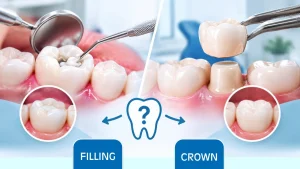
Dental Crown vs. Filling: Which Treatment Does Your Tooth Need?
If you have a cavity, chipped tooth, cracked tooth, or old restoration that needs repair, you may be wondering: Do I need a filling or
Why Does My Tooth Hurt When I Bite Down? 8 Common Causes & What to Do
A tooth that hurts when you bite down can be caused by something relatively simple, such as a filling that needs adjustment, or by a
Custom Sports Mouthguards vs. Store-Bought: Which Is Better?
In a sporting-goods store or if you browse online you can find a wide variety of mouthguards. A few are taken straight from the package,

Bleeding Gums Aren’t Normal: 7 Signs of Gum Disease You Shouldn’t Ignore
While you are brushing your teeth, you notice a small amount of pink in the sink. It’s easy to ignore, especially if your gums aren’t

Gum Disease and Heart Health: What’s the Connection?
If you’re considering ways of looking after your heart, it’s probably not the first thing that comes to mind to brush and floss. However, since

How to Overcome Dental Anxiety: Practical Tips for a Calmer Visit
Feeling nervous about dental treatment is nothing to be embarrassed about. A fear of the dentist can range from mild uneasiness before an appointment