

The most important thing for a child’s oral health is their parents. Going to the dentist is important, but the daily dental habits kids learn at home will determine how well they do in the long run. At Pinellas Family Dental, we know from experience that consistent home routines can prevent cavities, boost confidence, and give you a healthy smile for life. These are the most important dental habits that every child should learn.
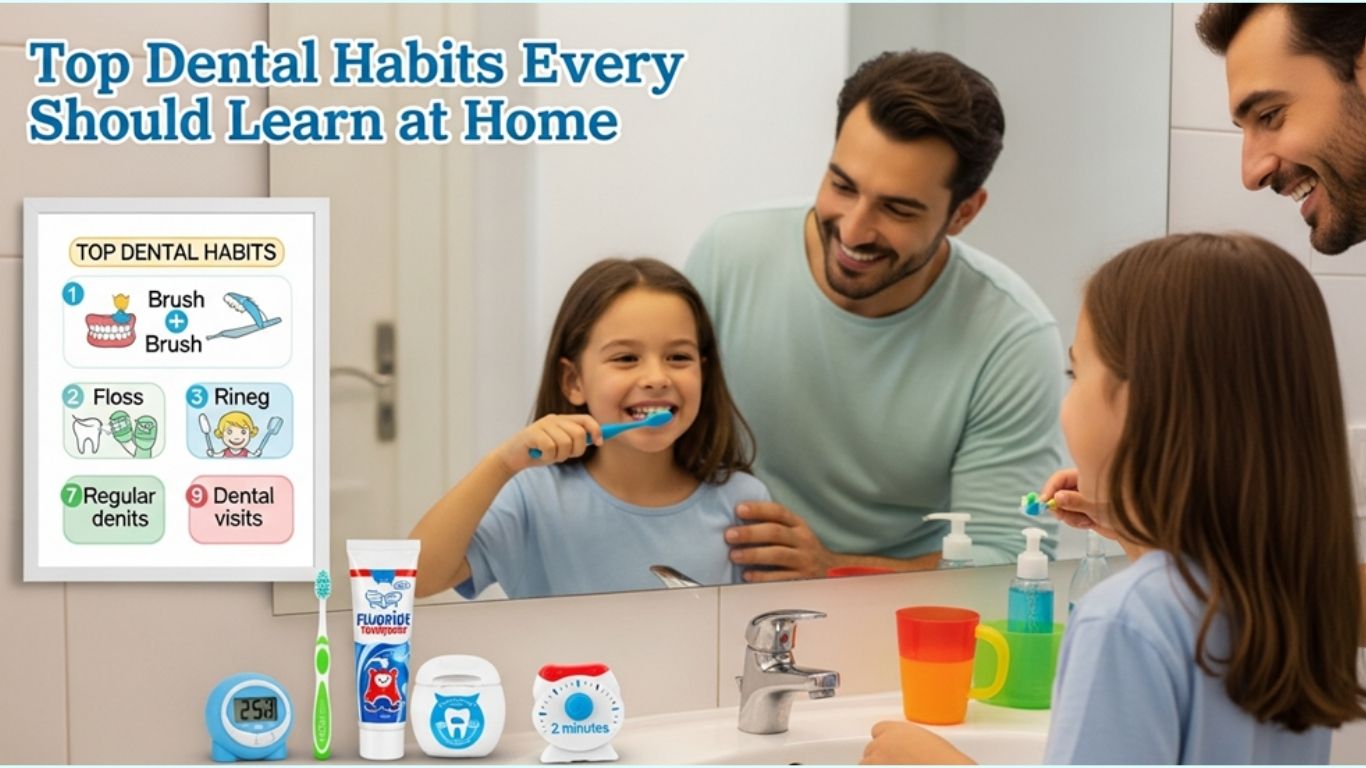
Why Taking Care of Your Teeth at Home Is Important for Your Health
Parents set the stage, but dentists can give checkups and treatments. Since kids spend 99% of their time at home, it’s the best place to teach them how to take care of their teeth. Studies show that kids with routines at home have 40% fewer cavities and are more likely to visit the dentist. A 2019 CDC study links the establishment of regular dental routines at home to a significant reduction in cavities.
Good habits can help you feel better about yourself and less anxious about going to the dentist. Kids who learn to brush and floss on their feel more in control, which makes it easier for them to get orthodontic treatment and take care of their teeth as adults. Starting early, before age three, builds brain wiring that makes it easier to take care of your teeth. According to research from the Pediatric Health Institute, early dental habits form key neuronal connections associated with long-term oral care. What do you get out of it? Less time spent in the emergency room, lower costs, and healthier smiles as adults.
Habit #1: Brush your teeth twice a day the right way.
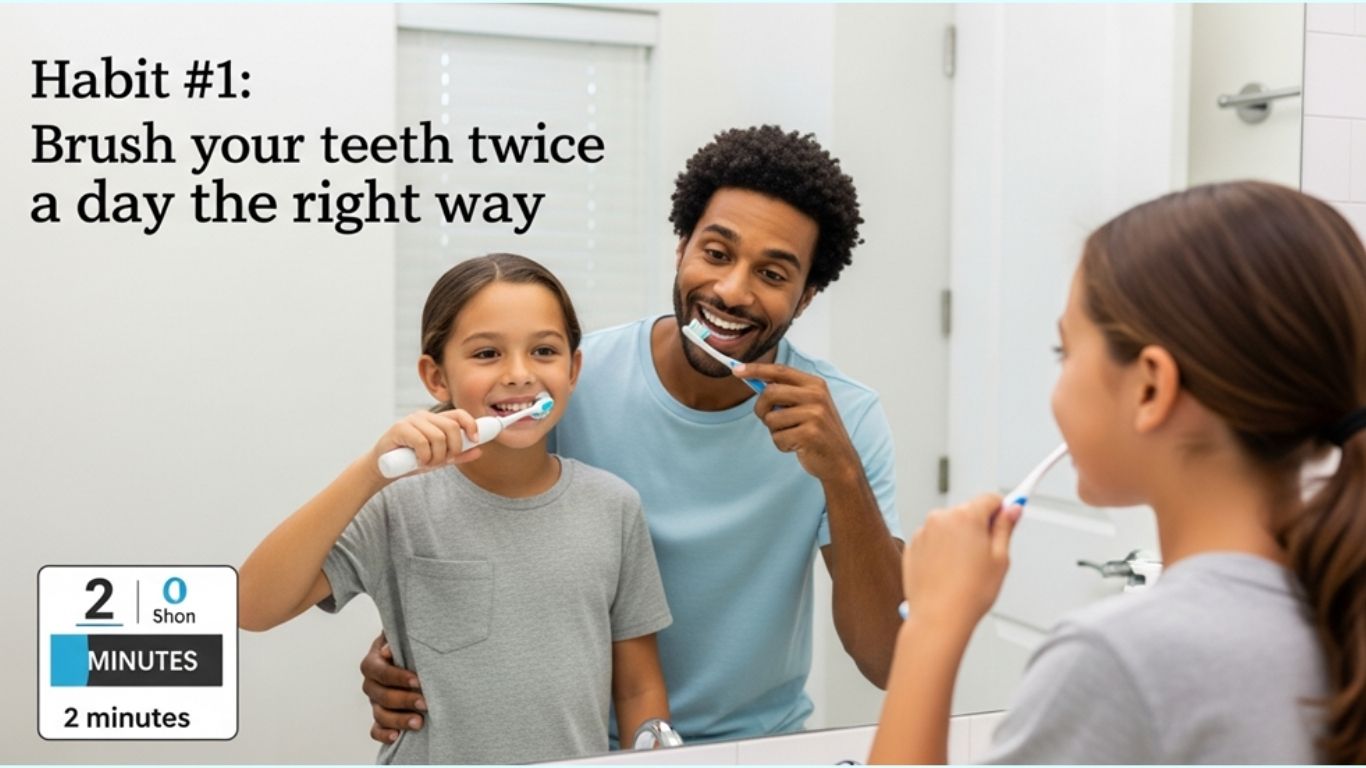
Kickstart Your Dental Routine: Painting Tiny Circles
Brushing is still the most important thing for oral health, but how you do it is more important than how long. Imagine your child painting tiny circles on a basketball. Kids should brush their teeth for two minutes twice a day, once in the morning and once at night. Use a soft-bristle toothbrush and a pea-sized amount of fluoride toothpaste (or a rice-sized amount for kids under three).
Imagine gently polishing pearls as you hold the brush at a 45-degree angle to the gums. Use short, circular motions to cover all surfaces, including the outer, inner, and chewing surfaces. Don’t forget about your tongue, which has bacteria that make your breath smell foul. Electric toothbrushes help kids brush their teeth better, especially when they are getting their permanent teeth around 6 or 7 years old.
Use timers, songs, or applications to make it fun. Brushing in front of a mirror lets kids see their parents do it, strengthening family ties. To keep them working, change your toothbrush every three months or after you get sick.
Habit #2: Flossing every day to get to what brushing misses
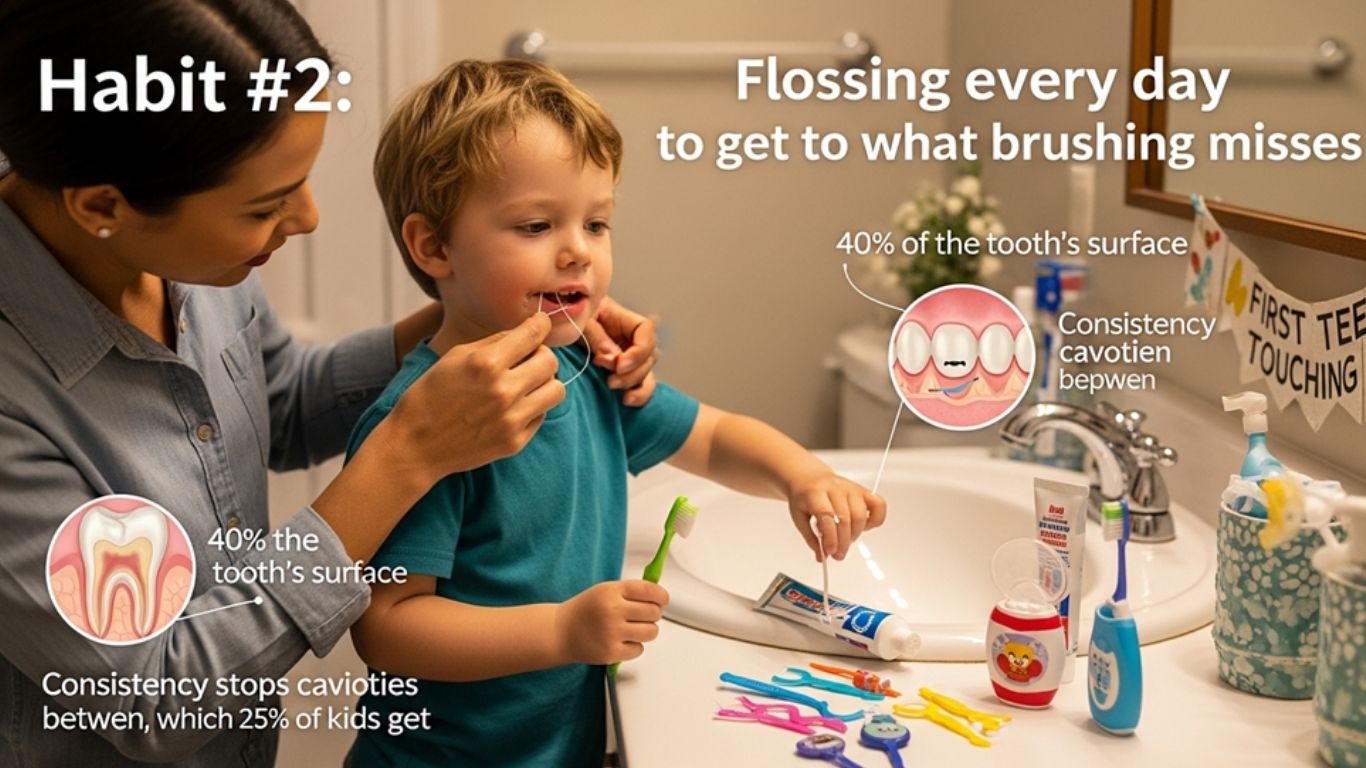
Flossing removes plaque and food particles that get stuck between teeth where brushes can’t reach. This is 40% of the tooth’s surface. A memorable milestone in a child’s dental hygiene journey is when two teeth first touch, usually around age 2. Celebrate this moment as an achievement worth sharing with your child, and mark it as the perfect time to introduce flossing. For young kids who have trouble with regular string, use floss picks or oral irrigators instead.
Show them how to do it by gently sliding floss between their teeth in a C-shape around each tooth and moving it up and down. Parents should floss their kids’ teeth until they are 8 to 10 years old, when their dexterity gets better. Flossing before brushing at night removes the dirt that builds up throughout the day.
It’s normal for kids to resist. To make it more fun, let them pick colorful floss or use flossers featuring their favorite characters. Consistency stops cavities between teeth, which 25% of kids get even when they brush well.
Habit #3: Cutting Back on Sugary Drinks and Snacks
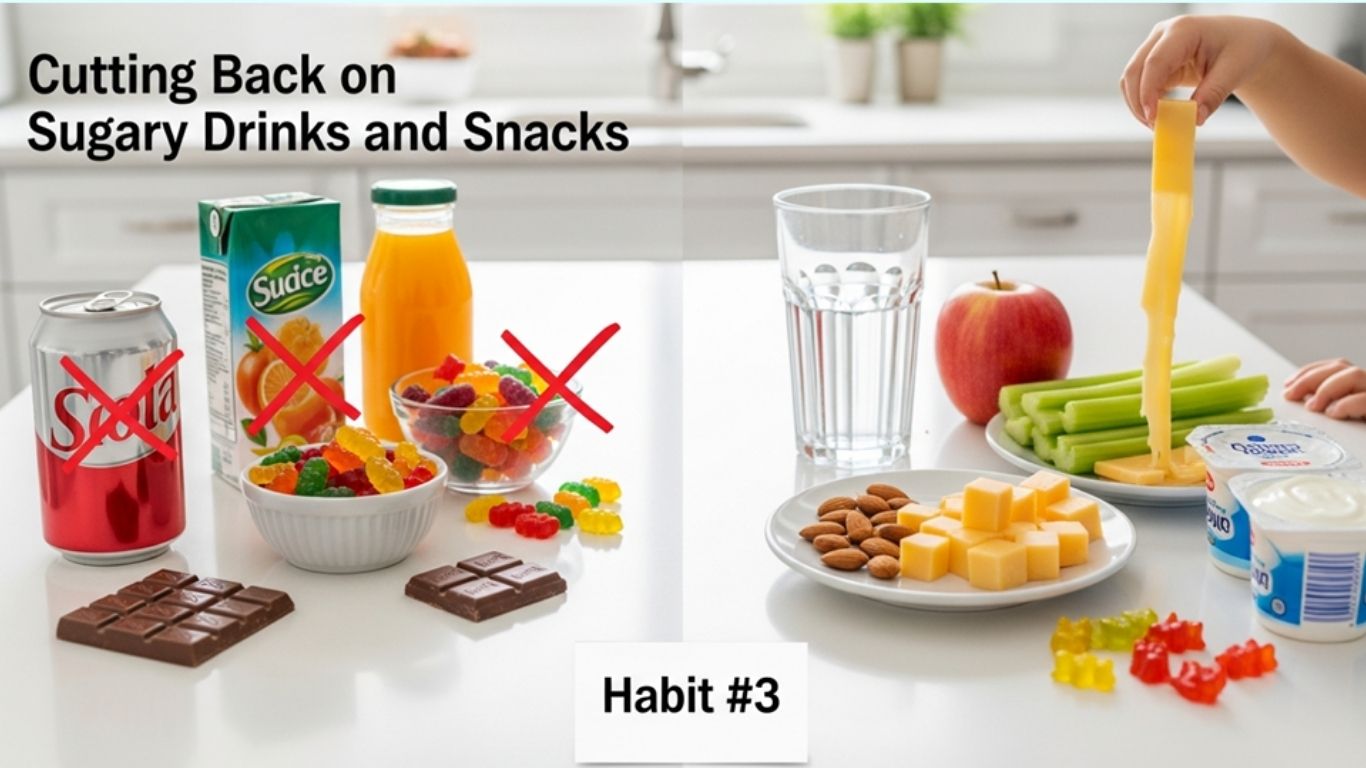
Most parents don’t know that diet has a bigger effect on dental health than they think. Bacteria love sugar and make acids that eat away at enamel within 20 minutes of eating it. Only eat sweet snacks at meals, and instead of candy, try cheese, nuts, or fresh vegetables that are beneficial for your teeth. Swap after-school gummies for string cheese, or replace a sugary dessert with a handful of almonds for a healthier choice that supports oral health.
Water is better than juice and soda because juice’s natural sugars still cause decay. Stay away from sticky candies and dried fruit that get stuck in your teeth. Teach kids to rinse their mouths with water after they eat to neutralize acids and wash away food debris.
Apples, celery sticks, and yogurt are all good snacks because they stimulate saliva production, which is nature’s mouthwash. Meal planning is helpful: combine sweets with dairy to balance out acids. This habit helps keep kids from developing the most common dental problem: tooth decay.
Habit #4: Drinking a lot of water all day long
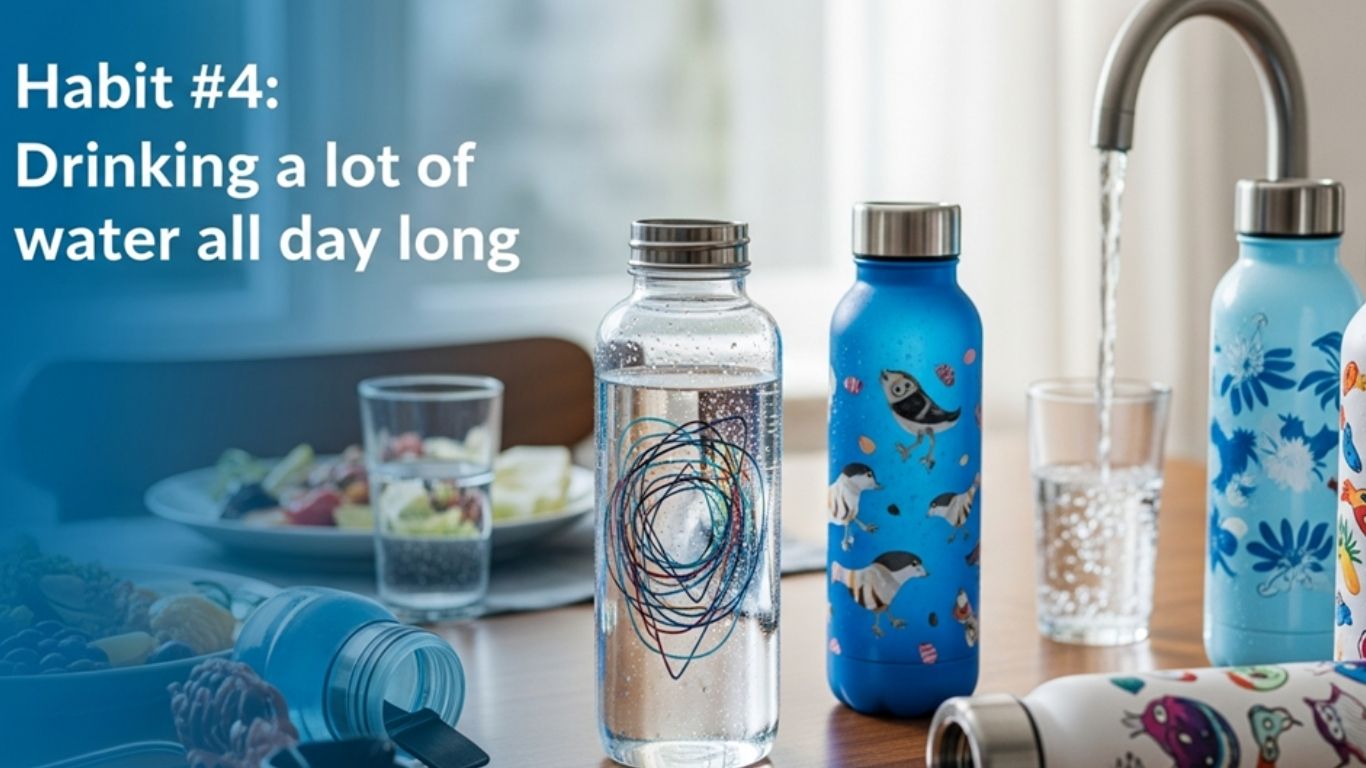
Water is the unrecognized hero of keeping your mouth healthy, a true “secret sidekick” in your dental routine. Known as the “cavity-buster drink,” water helps wash away bits of food, thins out acids, and increases saliva production, which kills bacteria and replenishes minerals in enamel. Encourage people to drink water with every meal and as their main drink in between.
Fluoridated tap water has minerals that are beneficial for your teeth. Don’t drink sugary drinks all day long, as they can damage your teeth. Bring along reusable water bottles with intriguing designs to make drinking water more fun.
For kids who live in dry places or wear braces, drinking more water can help keep their mouths from drying out and becoming sore. This straightforward habit greatly decreases the chance of cavities without any special products. By giving water a fun identity, kids might see it as a superpower for their teeth!
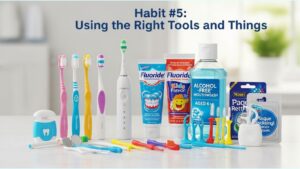
Habit #5: Using the Right Tools and Things
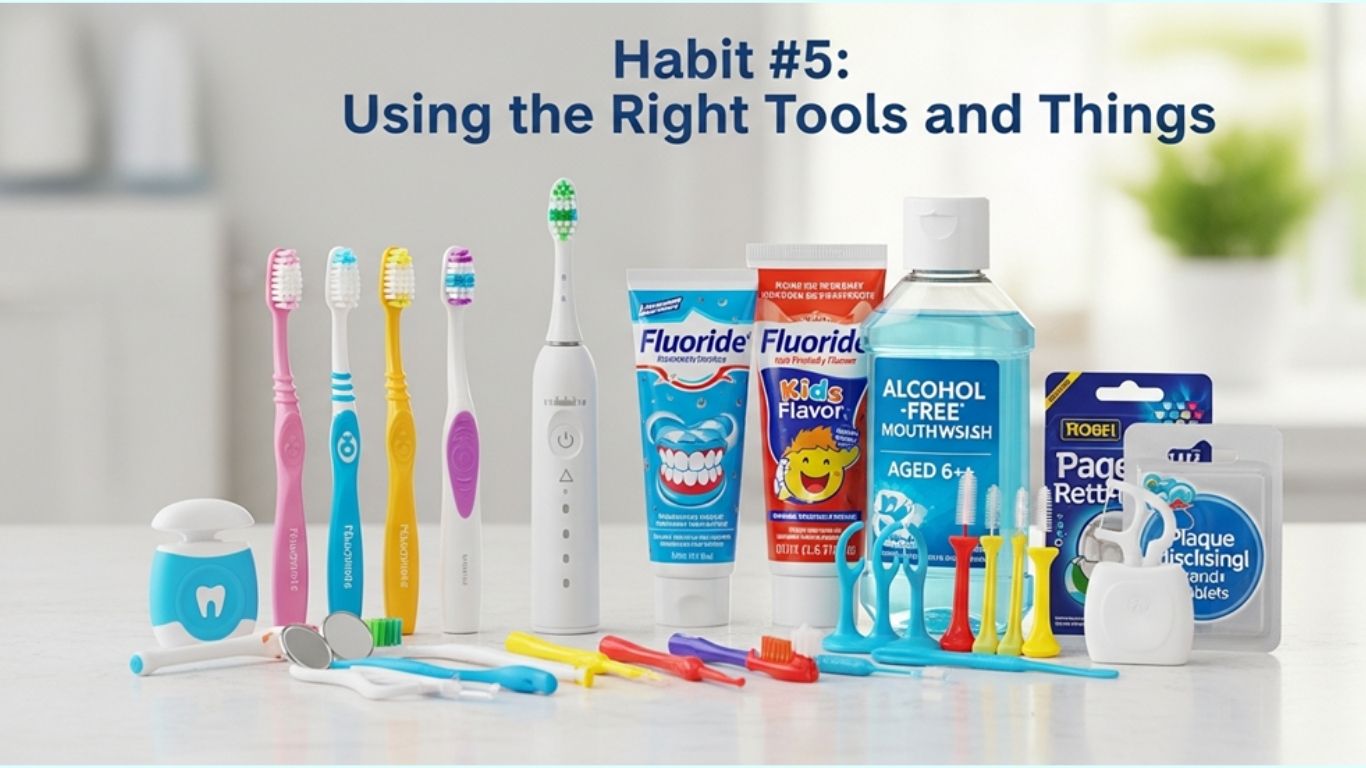
Dental care is effective and fun when you have the right tools. Pick toothbrushes that are the right size for small mouths and have soft bristles to protect your gums and enamel. Kids’ electric brushes frequently have timers and pressure sensors to help them clean more effectively.
Fluoride toothpaste is a must because it strengthens enamel and helps prevent early decay. Choose flavors kids like and avoid formulas that are too abrasive. For kids 6 and up, use mouthwash without alcohol to reach more places.
Dental floss, interdental brushes, and plaque-disclosing tablets help kids see what they’re doing. Tools that are right for their age help kids become more independent. When you shop together, kids will feel more as if they own the items they choose.
Habit #6: Clean your tongue often to keep your breath fresh.
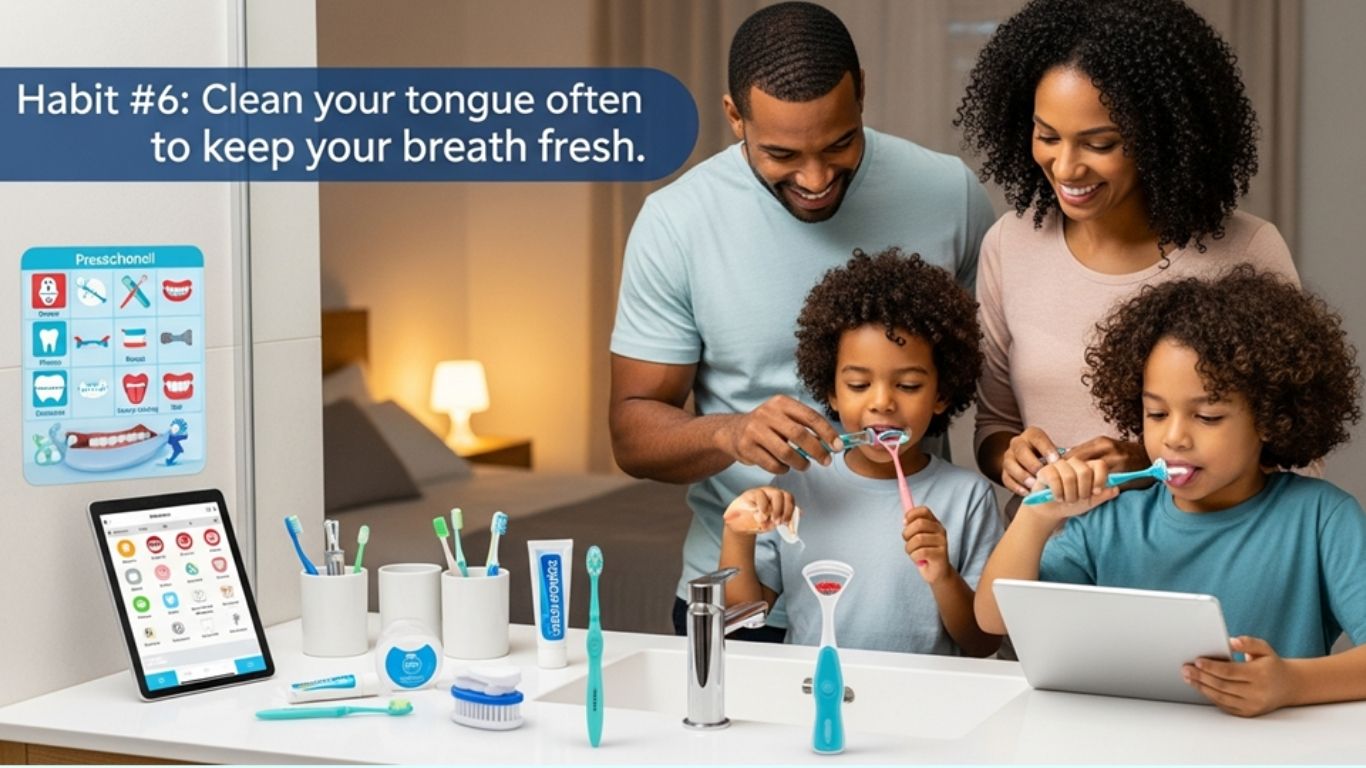
Cleaning your tongue removes the bacteria that cause 90% of bad breath cases, but it’s often forgotten. Once a day, gently use the back of the toothbrush or a special scraper. This habit makes you more aware of tastes, which encourages you to eat better, and it completes the oral hygiene routine.
Kids notice that their breath smells better right away, which is a good thing. For a really clean mouth, do this last thing after brushing and flossing.
A consistent dental routine at home leads to success. Set up a regular order: Establish a regular schedule that includes dinner, flossing, brushing, cleaning your tongue, and going to bed. Integrating the dental routine into a nightly wind-down ritual, like turning on calming bedtime music, can improve the experience and make the uptake smoother. For preschoolers, use charts with pictures, and for older kids, use apps. Position supplies in a bathroom spot where they are easily visible.
Set alarms or connect new routines to things you already do, like storytime. After 21 days, these become automatic, so consistency is more important than motivation. Use stickers or applications to track your progress, and reward yourself with things other than food when you reach certain goals.
How Parents Can Show and Encourage Good Behavior
Kids copy what they see. Brush and floss together, displaying excitement. If you want to limit their food intake, don’t snack in front of them. Instead of saying “good job,” say something like “Great job getting the back teeth!”
Be patient when dealing with resistance; short sessions are better than none at all. If parents don’t floss, their kids won’t either. Family dental problems bring people together and make them responsible.
At Pinellas Family Dental, we add to what you do at home with professional cleanings, sealants, and customized advice. Make an appointment for your child’s checkup today to help them keep these healthy habits and catch problems early. Let’s make sure that healthy smiles last a lifetime.

National Dentist’s Day: Honoring the Doctors Who Protect Your Smile
We celebrate the dedication, skill, and care that dentists show every day to keep our smiles healthy and bright. Every day, caring and
National Nutrition Month- The Link Between Diet and Dental Health
When we think about nutrition, the first things that typically come to mind are heart health, weight management, or perhaps energy levels. But did you

The Heart of Our Dental Team: Celebrating Our Dental Assistants
A young patient clings anxiously to her mother’s hand as she enters the bright treatment room, her large eyes revealing her worry about her first-ever

Effective Sleep Apnea Treatment with Dynaflex Dental Sleep Devices
At Pinellas Family Dental, we know that good sleep is foundational to your health, energy, and daily life. For many patients dealing with chronic snoring
Top Dental Habits Every Child Should Learn at Home
The most important thing for a child’s oral health is their parents. Going to the dentist is important, but the daily dental habits kids learn
National Children’s Dental Health Month: Building Healthy Smiles from an Early Age
February isn’t just about Valentine’s Day—it’s also National Children’s Dental Health Month, a time dedicated to raising awareness of the importance of children’s oral health.