

The most important change in modern dentistry is the shift from two-dimensional X-rays to three-dimensional imaging. A major innovation driving this change is the DEXIS OP 3D, a high-tech imaging system that helps dentists diagnose and treat patients far more accurately than ever before.
The DEXIS OP 3D captures high-definition 3D images of dental structures, while traditional 2D X-rays can miss critical details. This allows doctors to detect problems earlier, plan treatments more precisely, and reduce the risk of complications in procedures such as implants, endodontics, orthodontics, and oral surgery.
Let’s explore what makes the DEXIS OP 3D so valuable for both patients and dentists.
 What Does the DEXIS OP 3D Do?
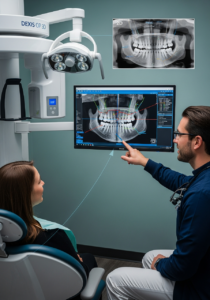 What Does the DEXIS OP 3D Do?
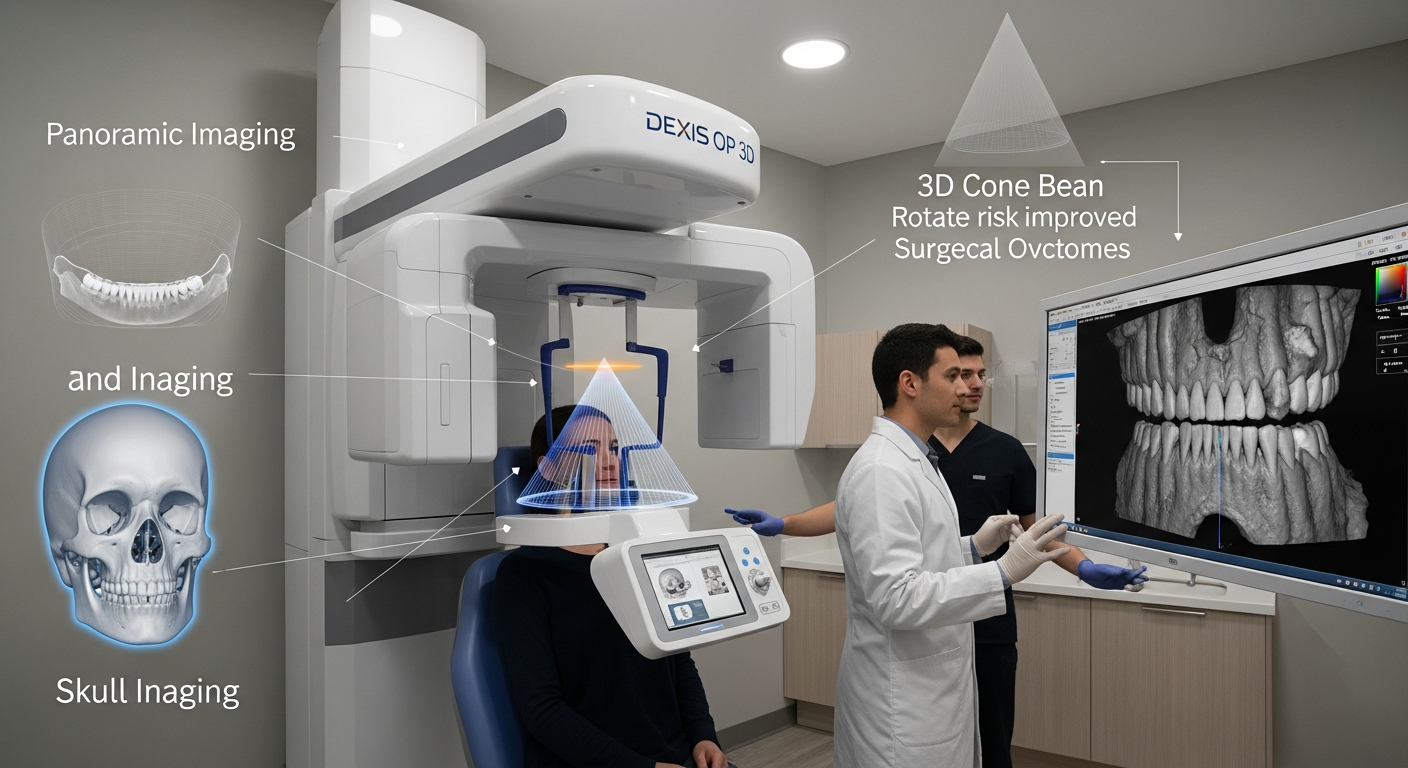
The DEXIS OP 3D offers multiple imaging capabilities, including:
- Panoramic imaging
- Skull imaging
- 3D cone beam computed tomography (CBCT)
Unlike traditional bulky machines, the OP 3D has a compact, modern design with an open gantry, making it comfortable for patients and easy to fit into dental clinics.
The system rotates around the patient’s head, it captures hundreds of images and reconstructs them into a detailed 3D model. Dentists can then zoom, rotate, slice, and examine structures from any angle.
Clinical studies show accuracy within 0.2 mm, which reduces surgical risks, protects nerves, and minimizes the need for repeat procedures.
Why 3D Imaging Is Better Than 2D
Limitations of 2D X-rays
With standard panoramic X-rays, a three-dimensional structure is flattened into a single plane. As a result:
- Bone width cannot be measured accurately.
- Roots and nerves may overlap.
- Infections, hidden canals, or cysts can be missed.
- Distortion may lead to misdiagnosis.
This can cause treatment delays, complications, or unnecessary surgeries.
Benefits of True 3D CBCT Imaging
With 3D CBCT, dentists can:
- Measure available bone precisely for implants.
- Track the exact path of nerves.
- Detects extra or hidden root canals.
- Identify fractures, cysts, and infections early.
- Plan surgeries digitally before treating the patient.
This eliminates guesswork and increases clinical confidence.
Features That Make DEXIS OP 3D Stand Out
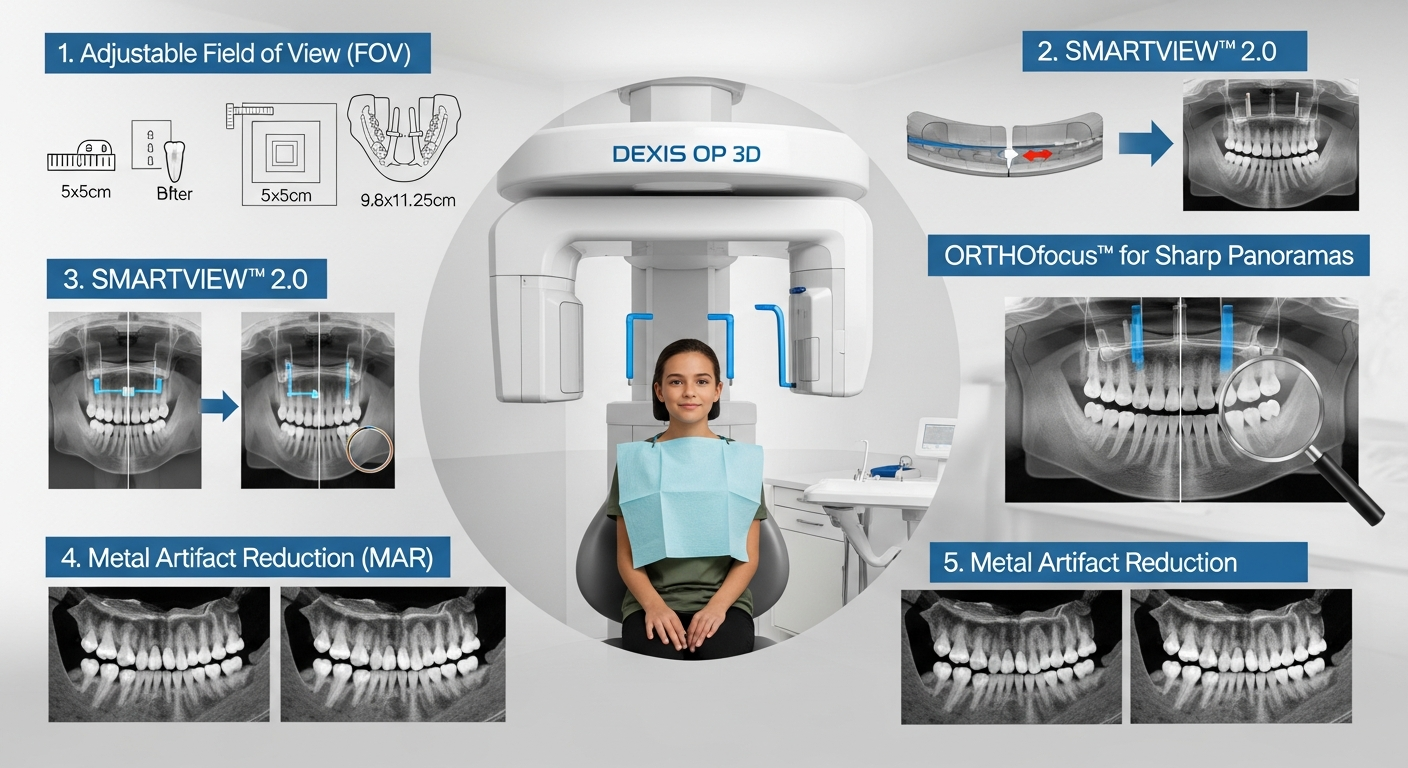
1. Adjustable Field of View (FOV)
The OP 3D allows clinicians to scan only the required area instead of the entire mouth, following the ALARA principle (As Low As Reasonably Achievable) to reduce radiation exposure.
Available views include:
- 5 × 5 cm – Single tooth, root canal, wisdom tooth
- 6 × 9 cm – Full upper or lower arch
- 9.8 × 11.25 cm – Both jaws and TMJ
- Optional 9 × 14 cm – TMJ and airway analysis
This makes imaging safer, faster, and more accurate.
2. SMARTVIEW™ 2.0
SMARTVIEW™ 2.0 allows dentists to take a quick scout image, adjust the scan area, and then perform the full 3D scan. This reduces retakes, saves time, and improves workflow efficiency.
3. ORTHOfocus™ for Sharp Panoramas
Even if a patient is not perfectly positioned, ORTHOfocus™ automatically selects the sharpest image layer, ensuring consistently high-quality panoramic images with fewer repeats.
4. Metal Artifact Reduction (MAR)
Metal restorations like crowns and bridges often cause white streaks on scans. The OP 3D’s advanced MAR algorithms minimize these distortions, making diagnostic areas clearer and easier to interpret.
5. Low-Dose Technology
Low-dose technology produces high-quality scans with radiation levels similar to a standard panoramic X-ray. This is especially useful for:
- Children
- Orthodontic planning
- Post-surgical follow-ups
It keeps patients safer without sacrificing image quality.
Designed for Patient Comfort
Unlike tunnel-style CT scanners, the OP 3D features an open design. Patients remain standing or seated, reducing anxiety and claustrophobia.
Its five-point positioning system—chin rest, bite block, forehead, and temple supports—keeps the patient stable, reducing motion blur and improving image clarity.
Clinical Applications of DEXIS OP 3D
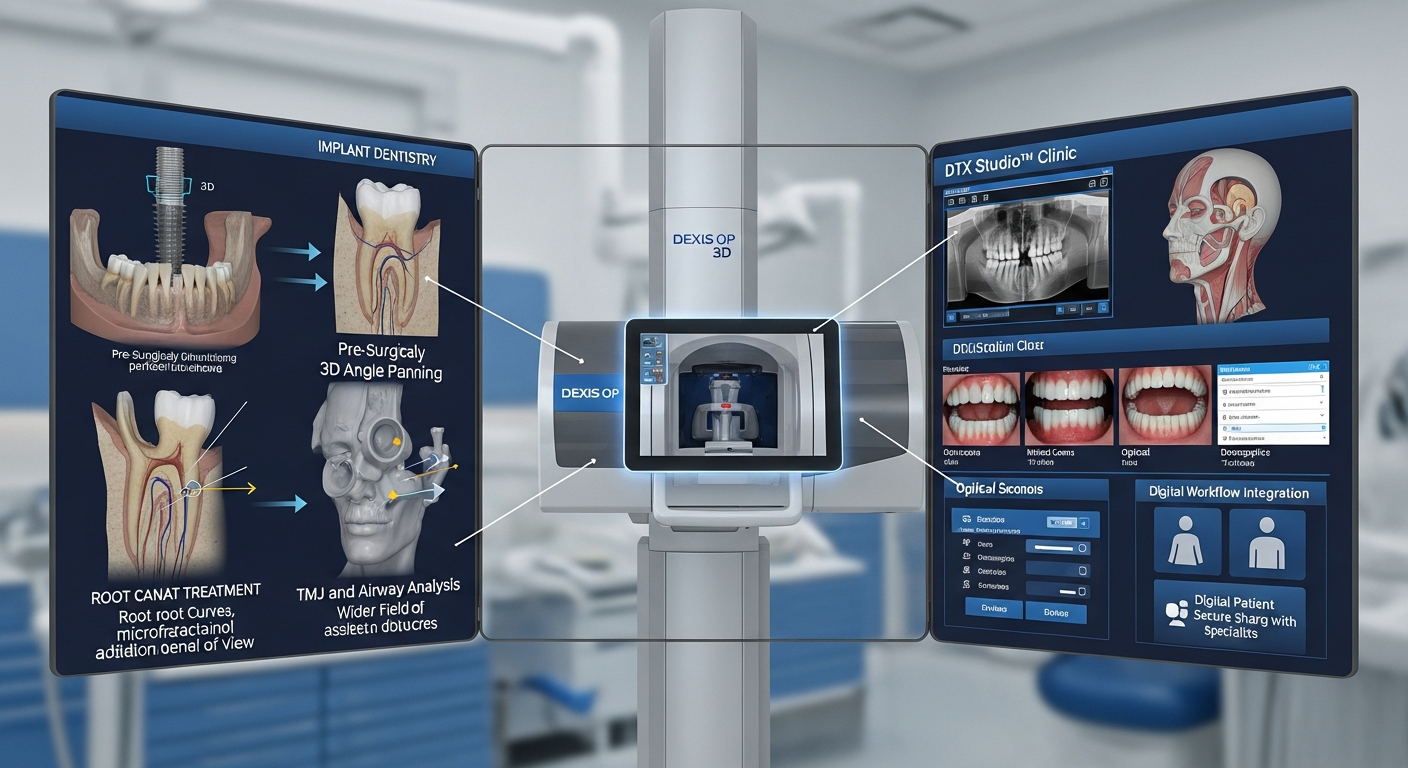
Implant Dentistry
Dentists can virtually place implants in the 3D model to confirm size, angle, and position before surgery. This reduces complications and speeds up healing.
Root Canal Treatment
High resolution and optimized voxel sizes allow clinicians to view root curvature, microfractures, and additional canals not visible on traditional X-rays.
TMJ and Airway Analysis
Wider fields of view help diagnose TMJ disorders and sleep apnea by visualizing jaw joints and airway spaces accurately.
Digital Workflow Integration
DEXIS OP 3D integrates with DTX Studio™ Clinic, allowing dentists to manage:
- 2D and 3D images
- Intraoral camera images
- Optical scanner data
- Complete patient records in one platform
This creates a “digital patient” profile that improves collaboration, diagnosis, and treatment planning. Images can also be securely shared with specialists for second opinions, speeding up care and improving outcomes.
Business Benefits for Dental Practices
Investing in DEXIS OP 3D delivers long-term value:
- Keeps advanced imaging in-house
- Increases treatment acceptance
- Reduces outsourcing costs
- Builds patient trust
- Positions the clinic as a technology leader
When patients can see their condition in 3D, they understand it better and are more likely to proceed with treatment.
Final Thoughts
The DEXIS OP 3D is more than an X-ray machine—it is a complete diagnostic solution. With precision imaging, low radiation exposure, digital workflows, and patient comfort, it helps dentists deliver care that is safer, smarter, and faster.
As dentistry continues to move toward digital solutions, the DEXIS OP 3D plays a key role in improving diagnosis, treatment planning, and the overall patient experience.

Why Does My Tooth Hurt When I Bite Down? 8 Common Causes & What to Do
A tooth that hurts when you bite down can be caused by something relatively simple, such as a filling that needs adjustment, or by a
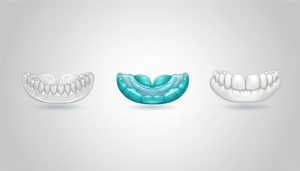
Custom Sports Mouthguards vs. Store-Bought: Which Is Better?
In a sporting-goods store or if you browse online you can find a wide variety of mouthguards. A few are taken straight from the package,

Bleeding Gums Aren’t Normal: 7 Signs of Gum Disease You Shouldn’t Ignore
While you are brushing your teeth, you notice a small amount of pink in the sink. It’s easy to ignore, especially if your gums aren’t
Gum Disease and Heart Health: What’s the Connection?
If you’re considering ways of looking after your heart, it’s probably not the first thing that comes to mind to brush and floss. However, since

How to Overcome Dental Anxiety: Practical Tips for a Calmer Visit
Feeling nervous about dental treatment is nothing to be embarrassed about. A fear of the dentist can range from mild uneasiness before an appointment

Why Patient Experience Matters in Dentistry
Why Patient Experience Matters in Dentistry Successful dental care is not based only on the procedure performed. It is also shaped by how patients are